AmcoTax.Admin

About Angela Shannon

This author has not yet filled in any details.
So far Angela Shannon has created 101 blog entries.

AUSTRALIA’S GREAT DEBT GAMBLE

AFR Review 3-4 July 2021. Page13

Intergenerational report Policymakers are betting on low rates and solid growth, writes Ronald Mizen.

Tony Abbott and Joe Hockey’s infamous 2014 budget became so toxic it ultimately destroyed its makers; the task facing Prime Minister Scott Morrison and Treasurer Josh Frydenberg is orders of magnitude bigger.

Abbott and Hockey won an election on a platform of fixing Labor’s ‘‘debt and deficit disaster’’, but in the end, the job of selling fiscal repair was overwhelming for the former prime minister and his treasurer.

Not even the highly politicised release of the 2015 Intergenerational Report, which outlined an economic renaissance over the four decades hence if people embraced the duo’s policies, helped.

The fall from grace was swift. Throw forward a little more than half a decade, and Morrison and Frydenberg face a more complex set of challenges.

In financial year 2015, net debt was about 14 per cent of economic output, and the deficit was expected to be $30 billion, or about 1.8 per cent of GDP (which included an additional $8 billion spent by the Coalition).

Today, net debt is forecast to peak at 40.9 per cent of GDP and the deficit is expected to hover between 2.4 per cent and 5 per cent of GDP for some years.

Labor points to the global financial crisis and its more than $70 billion in economic stimulus between 2008 and 2009 as the root cause of the budget deterioration during its time in government.

The Coalition opposed much of this spending, which, as then opposition leader Malcolm Turnbull later said in his biography, made Abbott’s and Hockey’s eventual debt and deficit campaign possible.

In stark contrast, few criticise the almost $300 billion spent in direct economic support to help the nation through, and out of the COVID-19 pandemic – not only was it appropriate, it was low.

‘‘As a share of the economy, net debt is around half of that in the UK and US and less than a third of that in Japan,’’ Frydenberg said on budget night. But that just makes the eventual repair pitch all the more difficult.

Savings of an order last seen in the 2014 budget – or about $40 billion to$50 billion a year – will eventually have to be made to tame the ballooning bottom line, says Deloitte Access Economics partner Chris Richardson. ‘‘That’s a challenge. To be clear, budget repair shouldn’t start soon. And it can – and should – be slow. But it won’t be fun,’’ he says.

On current settings, Australians are in for 40 years of debt and deficit, this week’s release of the 2021 Intergenerational Report shows. The budget comes within a whisker of balance in 2036-37, reaching 0.7 per cent of GDP before falling away again to 2.3 per cent in 2060-61, a consequence of increased spending and the artificial tax-to-GDP cap of 23.9 per cent.

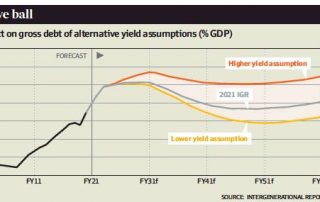
Net debt is expected to hit 34.4 per cent of GDP by financial year 2061, while gross debt – a better determiner of serviceability – reaches 40.8 per cent. And that outcome is on the rosy side – the risk is mostly downside. Dig a little deeper into the document and a very different picture emerges.

Frydenberg argues that, while gross debt has increased significantly since the onset of the pandemic, the cost of servicing that debt is lower in 2021-22 than it was in 2018-19, as a result of historically low interest rates. ‘‘Low yields, together with strong economic growth, means the government can reduce the debt-to-GDP ratio without running a surplus,’’ the 2021-22 budget papers say.

That scenario, of course, assumes low yields and strong economic growth. Sensitivity analysis in the Intergenerational Report shows that if 10-year bond yields converge from their current lows over five years to the long-run rate of 5 per cent, the debt and deficit profile deteriorates dramatically. The deficit increases by 0.6 of a percentage point to about 3 per cent of GDP by 2060-61, which adds about 14 percentage points to gross debt and lifts the outlook to just shy of 55 per cent of GDP.

Indicators generally suggest neither inflation nor bond yields will rise too far in that space of time, says Tony Morriss, Bank of America’s head of Australian economics and rates strategy. ‘‘The two major factors we would need to see would be a sustained rise in global and local inflation and a change in the global structure of interest rates and bond yields, most notably a move away from zero or negative interest rates in Europe and Japan that helped anchor yields since the GFC.’’ he says.

Then there’s the question of ‘‘strong economic growth’’. Productivity accounted for more than 80 per cent of national income growth in the past 30 years, and Frydenberg labelled it ‘‘the most vital ingredient in lifting our long-term living standards and wages’’.

Falling just 0.3 of a percentage point short of the forecast 1.5 per cent average growth rate forecast in the IGR will have significant consequences. Gross national income will be $32,000 per person lower, pushing down government tax receipts and lifting net debt as a portion of the economy to more than 57 per cent by 2060, and gross debt to just shy of 64 per cent.

The overall size of the economy would be $500 billion smaller at about $4.95 trillion (or $127,600 per person) compared with the baseline scenario of $5.46 trillion (or $140,900 per person). Yet actual productivity gains since the 2015 IGR have been barely one-third of the 1.5 per cent rate assumed.

Frydenberg says the ‘‘big bang’’ reforms of the 1980s and 1990s cannot be repeated and future reform will be incremental; but economists are sceptical about whether this will be enough to reverse the trend.

‘‘Even the sensitivity analysis suggestion of 1.2 per cent is incredibly optimistic. If we were able to achieve 1.2 per cent that would be a miracle,’’ says Blueprint Institute chief executive Steven Hamilton.

Big reform, as recent history has shown, is a difficult proposition, especially when the debate has become one where there can be no losers. ‘‘Reforms cost too many votes for governments to even try to champion them,’’ says Richardson.

The Business Council of Australia (BCA) this week pulled up the stumps on waiting for politicians to lead and drive a reform agenda, instead outlining a plan to take its message to the people and build a groundswell of support for reform.

Gross national income per person could be $10,000 better off over the decade if measures are introduced to boost productivity and stop it from ‘‘acting as a handbrake on the economy’’, says BCA chief executive Jennifer Westacott.

That wouldn’t make up for the $11,000 per-person lost over the last decade as a result of what the Productivity Commission calls the worst for productivity growth in more than half a century.

Then there’s the long-term impact on the nation’s population because of the closed international border during the pandemic, and the benefits of making up for this lost ground over the next 40 years.

Australia’s population was forecast to reach almost 40 million by financial year 2055, in the 2015 IGR, but because of COVID-19 and a much-lower-than-forecast fertility rate, it is now likely to reach about 38.8 million five years later.

This comes with a significant cost. But boosting annual net overseas migration from 235,000 a year to 327,000 by 2060-61 would lift real GDP growth from 2.3 per cent to 2.6 per cent by the end of the forecast period, and add $260 billion to the economy.

Closing borders has been politically popular, even while tens of thousands of Australians remain stranded overseas. Some people draw a connection between Australia’s success in lowering the jobless rate and the nation’s tightly sealed international border.

So, while the Intergenerational Report shows the need to not only return migration to previous levels but also boost it to make up for lost ground, the politics of such a proposition could be difficult after the Fortress Australia mindset.

Eventually tough, but necessary, decisions will need to be made on reform, on budget repair and on opening the border.

‘‘What will it take for either side of politics to do something bold?’’ asks Blueprint’s Hamilton. [If] an IGR which shows budget carnage over the next 40-years isn’t enough – what will be enough?’’ P

AUSTRALIA’S GREAT DEBT GAMBLE2021-07-29T10:07:11+10:00

Office crush: density no love story for landlords

AFR Article: Tuesday 22 June 2021. Page 30

Office workers in Australia’s two largest cities are not the most cramped in the world, but they are tighter than the global average, putting employers and landlords under greater pressure than others to spread people out in a post-COVID-19 environment, a new report by JLL shows.

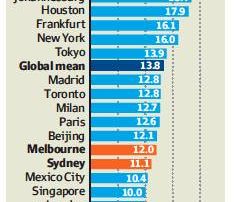
Sydney’s white-collar workforce has an average office density of 11.1sq m per person and Melbourne 12sq m, making them more densely crowded than the global average of 13.3sq m, according to the Benchmarking Cities and Real Estate report.

They are not the tightest of office environments – call centre-heavy Manila has that distinction, with an average density of just 6.9sq m per person – but at a time when owners and users of office environments face pressure to reconfigure their space to attract staff and keep them engaged, Sydney and Melbourne are not immune.

‘‘Occupational densities will be part of a widening suite of dynamic ‘metrics that matter’, including those measuring human experience, which businesses and the cities they are housed in will increasingly need to access,’’ said Victoria Mejevitch, head of JLL’s Global Benchmarking Services.

The least-dense offices in the report are in Chicago, with an average density, based on occupied usable floor area, of 22.8sq m per person, followed by Los Angeles with 20.9sq m and Munich with 18.9sq m. New York was the densest US city, with an average 16sq m per person.

Density is not everything, however. Office costs matter, too. Some locations with the densest offices such as Hong Kong (9.1sq m per person) and London (9.8sq m) are constrained in the extent to which they can reduce density because of their high costs – more than $US2000 per square metre each.

Cities with low densities face little impetus to de-densify further, and in New York, with prices close to Hong Kong’s average $US2500 ($2672) per sq m, the pressure not to reduce density any further will be great.

Sydney and Melbourne, by contrast, are in a group of cities with average office costs around the $US1000 per sq m mark (sub-$US1000 for Sydney and closer to $US500 for Melbourne) and can more afford to de-densify because of their comparatively low office costs, the report says.

‘‘There is another group of cities, however, with comparatively tight densities but where relatively lower space costs mean that the opportunity cost of de-densification may be more compelling – Singapore, Sydney, Melbourne, Toronto, Paris, Milan and Madrid,’’ the report says.

It was a consideration for Australian landlords and employers, JLL Australia chief executive Stephen Conry said.

‘‘We have already seen social distancing protocols exerting upward pressure on workspace ratios and companies rethinking the configuration of their office space,’’ Mr Conry said.

‘‘The emphasis has been on creating productive work spaces that have a high standard of health and wellness.’’

Some sectors, such as technology, will be better able to reduce density and work remotely than others, such as healthcare and the legal industry, it says.

Office crush: density no love story for landlords2021-07-02T10:59:47+10:00

Housing now worth four times GDP

AFR Article: Wednesday 16 June 2021. Page 13

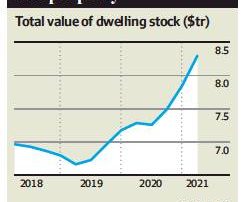
The average price of a residential property in NSW surpassed $1 million for the first time on record in the March quarter, while the total value of Australian homes hit $8 trillion.

Australian residential real estate is now four times the size of gross domestic product and about $1 trillion more than the combined value of the ASX, superannuation and commercial real estate.

The total value of residential property lifted $450 billion, the largest rise on record according to the Australian Bureau of Statistics, and prices in capital cities rose 5.4 per cent to be up 7.5 per cent for the year.

‘‘Strong demand for housing was supported by record low interest rates, government initiatives and rising consumer confidence,’’ said Michelle Marquardt, ABS head of prices statistics.

‘‘Price rises were observed in all segments of the housing market, with growth in house prices continuing to outpace price growth in attached dwellings.’’

According to the ABS, about $7.9 trillion of residential dwelling stock is held by households, which means their balance sheets experienced a major bump over the March quarter.

The increase in the property market was particularly pronounced in Sydney and Hobart, which recorded a 6.1 per cent price increase over the quarter, followed by Canberra (5.6 per cent), Perth (5.2 per cent), Melbourne (5.1 per cent) and Darwin (4.7 per cent).

The increase in Sydney was the largest quarterly rise in the ABS residential property price index since the June quarter of 2015, with houses lifting 8 per cent over the quarter to be up 10.8 per cent over the year, compared with 2.6 per cent and 2.8 per cent respectively for units, apartments and townhouses.

While the Sydney median house price has been above $1 million for some time, ‘‘this was the first time any state or territory had seen the average price of dwellings rise above $1 million’’, Ms Marquardt said.

NSW now accounts for $3.3 trillion, or 40 per cent, of the total market.

The price of an average residential dwelling in Australia increased by $39,100 to $779,000 over the reporting period, while an additional 44,300 dwellings were added, lifting the national stock to about 10.6 million.

The Reserve Bank of Australia acknowledged the hot housing market in its monthly board meeting minutes, released yesterday, and said policy-makers needed to keep a close eye on lending standards.

This comes after a sudden return of investors to the market sparked concerns that the Australian Prudential Regulation Authority could step in with macro-prudential measures to curb a possible credit-fuelled boom.

The RBA tweaked its discussion around housing market conditions in its post meeting statement earlier this month, and explicitly called out the greater role investors are now playing in the booming property market.

‘‘Members noted that housing markets had strengthened further, with prices continuing to increase in all major markets. Housing credit growth had also strengthened, with strong demand from owner-occupiers, especially first home buyers.

‘‘Given the environment of strong demand for housing, rising housing prices and low interest rates, members agreed on the importance of maintaining lending standards and carefully monitoring trends in borrowing.’’

The central bank acknowledged that higher house prices would be likely to have a positive flow-on effect for household consumption due to the ‘‘wealth effect’’ of higher prices making people feel more comfortable about their finances.

Housing now worth four times GDP2021-07-02T10:49:07+10:00

Investors pay Australia to hold their money

AFR Article: Friday 11 June 2021. Page 8

The federal government has paid a negative interest rate on $1 billion borrowed from institutional investors, the first time on record the total cost of a Treasury debt sale has fallen below zero.

Institutional investors such as foreign pension funds, insurers and banks need to park their money for short periods of time in safe assets and will pay the Australian government to hold their funds for the next three months.

Yesterday investors paid between -0.010 per cent and zero to lend $1 billion to the federal government until September.

The historic financing reflects central banks’ suppression of interest rates by buying government bonds in the secondary market, and the huge amounts of cash sloshing around the world’s financial system.

It also suggests debt investors have become less worried about a potential breakout in global inflation. Bond yields spiked in February on bets of higher inflation from the Biden administration’s $US1.9 trillion ($2.5 trillion) spending stimulus.

Yesterday the government’s debt manager, the Australian Office of Financial Management (AOFM), sold a three-month Treasury note attracting a weighted average yield of -0.0034 per cent.

The negative yield on short-term government debt is partly being driven by foreign investors engaging in a currency arbitrage, market sources said.

Investment banks are buying the debt on behalf of offshore investor clients, making a loss on the yield but earning a profit on three-month forward foreign exchange contracts.

The debt raising was more than eight times oversubscribed, with total bids of $8.65 billion.

AOFM head Rob Nicholl said demand for Australian government debt was strong. ‘‘We would expect that to remain for quite some time, particularly while the banks are not issuing their own short-term bank bill paper,’’ he said.

Banks are flush with funding thanks to deposits by households and businesses that are cashed up from government stimulus payments.

Banks also have access to cheap 0.1 per cent, three-year loans from the Reserve Bank of Australia’s $210 billion term funding facility.

They are therefore discouraging institutional investors such as superannuation funds from increasing bank deposits, forcing investors to put their money into other debt instruments such as low-yielding government debt.

The Treasury note sale was the first time successful bids in a government debt auction ranged from negative territory to zero and that the total cost of the debt raising was negative.

In December the government sold $1.5 billion of debt, some of which paid a negative interest rate of -0.01 per cent to investors. But overall, the weighted average yield on the three-month Treasury note last year was slightly positive at 0.0099 per cent.

Bond rates are falling sharply as fears of an inflationary spike subside. The Australian 10-year bond rate has slid to 1.43 per cent from 1.65 per cent just a week ago, and a two-year peak of 1.85 per cent reached in late February.

‘‘Money is looking for a home as QE from central banks floods the system with cash,’’ said ALTIUS Asset Management co-founder Chris Dickman.

‘‘Counterparties are pretty happy to get zero per cent at the moment,’’ he said. ‘‘It also reflects an impression that the inflation story is cooling.’’

Earlier this week, Mr Nicholl said the government was committed to holding a large stockpile of cash to meet its funding needs in a crisis and to manage outlays such as GST transfers to the states.

The government’s cash balance at the RBA is raised through the issuance of Treasury notes. It peaked around $70 billion last September and has run down to about $30 billion at present.

The RBA is currently paying commercial banks zero to deposit excess funds with it. The policy is designed to encourage banks to seek higher returns by lending to households and businesses, or lending to the government for a positive yield on longer-term bonds.

Non-bank institutional investors, which cannot deposit cash with the RBA, are investing in other risk-free assets, such as government debt.

Investors pay Australia to hold their money2021-07-02T10:43:27+10:00

Hot UK housing market creates economic risk

AFR Article: Wednesday 9 June 2021. Page 40

London | The UK property market is heating up rapidly, and a mix of surging demand and double-digit price growth is causing concern an unsustainable bubble is building.

The pace of mortgage approvals is running more than a third higher than its prepandemic level, and housing could be heading for its busiest year since before the GFC as buyers rush to take advantage of a tax cut. But with affordability stretched and lenders easing mortgage requirements, the signs are starting to worry some Bank of England policymakers.

The government’s tax holiday is only temporary, potentially creating a cliff edge and precipitating a slowdown toward the end of the year, just as job support programs end. Bank of England deputy governors Jon Cunliffe and Dave Ramsden both said this week that they are watching the housing market ‘‘carefully’’ amid the boom conditions.

One risk is that banks relax lending restraints because of the wave of demand. Nationwide Building Society has started offering new mortgages that are 5.5 times the incomes of first-time buyers, above the 4.5 ratio commonly used. If others follow suit and tell regulators they need to adjust to the market, ‘‘we do start to see some danger,’’ said Neal Hudson, founder of Residential Analysts.

Still, demand could be propped up after the tax perk is phased out in the coming months as pandemic effects linger, particularly the work-from-home culture that has fuelled a desire for bigger homes outside urban areas.

After more than a year of pandemic restrictions, residential property looks unscathed. Chancellor Rishi Sunak’s stamp-duty cut, which saved buyers as much as £15,000 ($27,300), lit a fire under the market as other parts of the economy suffered.

The surge in demand can be seen in mortgage and transaction numbers, both of which reached multi-year highs. Despite criticism that the stimulus was not needed, Mr Sunak extended the perk to October past its original deadline of March.

In addition to the stamp duty effect, the pandemic also sparked a shift in lifestyle choices, and the desire for bigger properties is creating regional hotspots within the housing market.

That structural shift is happening on a global scale, with the UK one of 13 countries that had double-digit house price growth in the past year, broker Knight Frank LLP says. That’s prompting authorities across the world to pull levers to put the brakes on rampant house price growth. Canada’s bank regulator has tightened mortgage lending requirements in light of its own housing boom, and New Zealand’s central bank is also threatening to act.

Back in the UK, ‘‘there are quite a few people that are worried about what’s going on with house prices outside of London,’’ said Marcus Dixon, head of research at LonRes, a property data company. ‘‘We don’t mind a little bit of growth but we don’t want a crash.’’

The latest figures from Nationwide Building Society put price growth close to 11 per cent. While that may be skewed because of the slump in activity during the UK’s first lockdown a year earlier, values are still on a tear. Statistics office data puts average gains in the first quarter at 9 per cent.

The mini-boom is an issue for those who were struggling to get on the property ladder even before the pandemic. With most lenders requiring a 20 per cent down payment, the average amount raised by new buyers to get a mortgage rose 23 per cent in 2020, Lloyds Banking Group says. Affordability was already stretched, particularly in London. Critics of Mr Sunak’s stamp duty cut say it added to the unequal fallout from the pandemic on younger workers. ‘‘One cannot ignore that housing booms shift wealth towards existing and generally older homeowners and can therefore widen intergenerational inequity,’’ Mr Cunliffe of the Bank of England said last month.

The divergence between those who can and those who cannot afford to buy a home hits at the heart of the Conservative Party’s push to get more people on the housing ladder. Its ‘‘Generation Buy’’ policy appeals to the British dream of home ownership as the main way of accumulating wealth.

But while many people built savings in the pandemic because they couldn’t take holidays, young workers were disproportionately in industries most affected by lockdowns, such as retail and restaurants, leaving them out of pocket at a time when they might be trying to save for a deposit.

The government has introduced a guarantee program for 95 per cent loan-to-value mortgages. But other criteria mean it is not always easy to get those loans. And for those who do, 5 per cent does not give buyers much of a margin above negative equity if home values fall. The program also stimulates demand without doing anything for supply, increasing the risks.

Hot UK housing market creates economic risk2021-07-02T10:38:56+10:00

Mortgage and rental stress worsen in May

AFR Article: Wednesday 9 June 2021. Page 40.

The proportion of households struggling with their mortgage has climbed by more than 3 percentage points in NSW and Canberra during May, as sky-high home prices stretched some families to their financial limits.

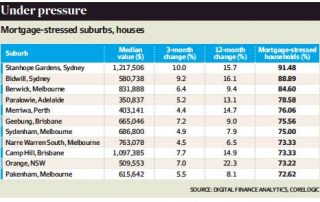
More than two in five (41.3 per cent) NSW households are now in mortgage distress – a rise from 38.2 per cent in April, while 42 per cent of Canberrans also struggled – up from 38.3 per cent, analysis by Digital Finance Analytics shows.

Mortgage stress across many states has been rising since JobKeeper ended in March. In Tasmania, 56.8 per cent of households were in mortgage stress, and more than two in five in Western Australia. The rest recorded a slight drop in the proportion of distressed households.

Households are deemed in distress if they earn less than they spend. The rolling survey of more than 52,000 households was conducted at the end of May.

‘‘The end of JobKeeper is beginning to bite and the lockdowns are not helping,’’ said DFA director Martin North.

‘‘Many households in stress have less hours worked than they want, and no income growth. Bigger mortgages by first time buyers and equity drawdowns are lifting repayments as lending standards ease and more interest-only loans are being made.’’

Stanhope Gardens in Sydney’s northwest posted the highest proportion of households experiencing mortgage stress, with 91.5 per cent of families spending more than they earn.

Mortgages have ballooned in the suburb after the median house price surged by 10 per cent in the three months ending May 31 to $1.2 million. In the past 12 months, house prices climbed by 15.7 per cent, CoreLogic data shows.

Households in the western Sydney suburb of Bidwill were also stretched, with 88.9 per cent earning less than they spend. Families were forced to take on bigger debts to buy a home after the median house price had risen by 9.2 per cent to $580,738 in just three months and by 16.1 per cent in a year.

Rental stress also surged across all states except the Northern Territory, where it improved marginally. In May, the proportion of households in rental stress jumped by 4.59 percentage points in Canberra, 3.46 percentage points in NSW and Victoria, and by 3.29 percentage points in Queensland.

‘‘There was a significant rise in rental stress, as the fallout from the removal of renter protections hit, and the JobKeeper and JobSeeker support ended,’’ Mr North said.

The number of households in rental stress nationwide rose from 1.78 million in April to 1.95 million in May.

‘‘The end of government support is hitting renters hard . . . more tenants are being asked to move or accept rent rises,’’ Mr North said.

‘‘Some still owe rents from the past year, which were not forgiven, just postponed in many cases.

‘‘Investors are trying to lift rents to alleviate negative returns, adding to the pressure, and some investors are now listing their investment properties, hoping to sell into the current market rises.’’

Mr North said mortgage and rental stress could worsen in the months ahead. ‘‘Until incomes rise, the conditions are set for more pressure on household finances.’’

Mortgage and rental stress worsen in May2021-07-02T10:37:20+10:00

Negative gearing tumbles on lower interest rates

The proportion of landlords negatively gearing rental properties has fallen below 60 per cent for the first time on record, reflecting a decline in interest rates.

Of the 2.2 million taxpayers owning at least one rental property, 1.3 million declared a net rental loss in 2018-19, according to new annual data published by the Australian Taxation Office.

Overall, net rental income was negative $3 billion.

Total gross rental income of $47.8 billion received by landlords was less than deductions for their cost of interest, capital works and other rental deductions incurred.

Despite the decline in negative gearing there are still many landlords owning multiple properties who are claiming a tax deduction for earning less rental income than the cost of running investment properties.

The number of landlords negative gearing at least six properties was 11,226 in 2018-19.

Some 10,935 landlords negative geared five properties, 26,719 owners had four properties claiming a net rental loss, 74,955 property investors had three properties negative geared and 250,035 had two properties claiming a loss.

Almost 1 million people – 931,132 – had one property negatively geared.

Landlords who claim a net rental loss are in effect betting on making money from a property investment via house price increases.

There were 19,113 fewer negatively geared landlords than in 2017-18, the first fall in five years, analysis by The Australian Financial Review shows.

As a share of landlords, 58.6 per cent claimed a net rental loss – the first time since records dating back to 2003-04 show a sub-60 per cent result.

The decline in negative gearing coincided with the Reserve Bank of Australia cutting the overnight cash rate to 1.25 per cent by June 2019 – then a record low.

The share of landlords claiming net rental losses peaked at 69.6 per cent in 2007-08, when the RBA raised the cash rate to 7.25 per cent during the mining investment boom and when market mortgage rates were about 10 per cent.

The share of landlords negative gearing property is likely to continue falling in the low interest rate era, because low mortgage rates make it harder to claim a net rental loss and make it more likely rental income will exceed the expenses of owning an investment property.

Landlords reported gross rental income of $47.8 billion in 2018-19.

More than offsetting this were deductions of $24 billion for rental interest, $4.1 billion for rental interest and $22.8 billion for other rental deductions.

Negative gearing tumbles on lower interest rates2021-07-02T10:32:30+10:00

Rental risk as Victoria investors sell

Australian Financial Review Thursday 3 June 2021

Victoria’s recent stamp duty hikes, higher land taxes and newly legislated minimum standards in market rental housing are prompting landlords to sell out and put the supply of rental stock at risk, agents warn.

Last month’s state budget property tax increases, along with new laws around renting that came into effect at the end of March, had prompted some landlords to give up, said Michael Love, the head of Melbourne’s northern suburbs-based Michael Love & Co agency.

‘‘They’re turning around and saying ‘Is real estate the vehicle I want to be investing in for a return?’,’’ said Mr Love, whose company manages 6000 rental properties.

‘‘They’re investing to get a return where they’re taxed heavily, there are additional costs and holding costs which have never been there.’’

Anthony Webb, the head of eastern suburbs-based real estate agency PhilipWebb, agreed.

‘‘It’s the vibe of the legislation is just making the pendulum swing that much towards the tenants,’’ said Mr Webb, whose business also has a rent roll of about 6000 homes.

‘‘It’s this combination of things making landlords go – it’s too hard and we’re going to sell.’’

It’s likely some landlords will sell out in the face of higher costs. A regulatory impact statement accompanying the new legislation said it was likely that as a result of introduction of minimum standards, 9 per cent of rental providers would increase rent, 4 per cent would sell the property and 4 per cent would not acquire future rental properties.

But low interest rates, and a buoyant housing market, are also prompting many residential property investors to come back into a market they had previously departed.

Housing values surged to record highs across all capitals except Perth and Darwin, with more growth expected in coming months as strong demand from buyers outpaces the falling volume of listings, CoreLogic figures this week showed.

Dwelling prices across the combined capitals surged 2.3 per cent in May – the second fastest growth rate since the 1980s.

The latest official home loan numbers last month showed investor lending, rose in March at its fastest pace in almost two decades.

New data showing home loan commitments to investor buyers jumped 12.7 per cent from February, the fastest increase since July 2003, to a seasonally adjusted monthly total of $7.8 billion.

They were ‘‘enormous’’ numbers and challenged the picture of a market solely driven by owner-occupiers.

But real estate agents said that landlords selling out would lead to a net loss of rental stock that would hurt tenants.

Rental risk as Victoria investors sell2021-06-09T13:32:42+10:00

House prices surge as listings slip

Australian Financial Review Wednesday 2 June 2021

Housing values have surged to record highs across all capitals except Perth and Darwin, with more growth expected in coming months as strong demand from buyers chases a dwindling number of listings.

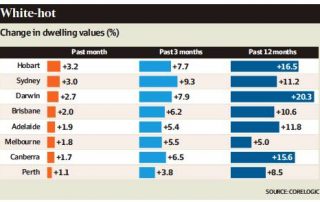
Dwelling prices across the combined capitals surged 2.3 per cent in May – the second-fastest growth rate since the 1980s, according to CoreLogic analysis.

Underpinning the growth, total listings around the country fell by 6.3 per cent over the month, separate figures from SQM Research show.

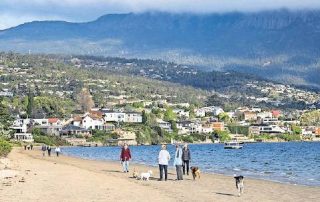
All capital cities posted strong increases, led by Hobart with a 3.2 per cent lift in prices. Next was Sydney at 3 per cent. Capital city prices are now on average 7.8 per cent above the previous record set in September 2017.

The growth momentum will eventually slow, however, as affordability worsens or if the banking regulator steps in with macro-prudential curbs, analysts say.

Dwelling prices over the year jumped by 10.6 per cent nationally – the strongest growth in almost 11 years.

In regional areas, home prices rose by 2 per cent in May and were up by 15.2 per cent on the year – the largest growth rate in nearly 17 years.

House prices posted 2.6 per cent monthly growth, while apartment prices rose by 1.4 per cent. House prices over the past 12 months rose by 11.4 per cent, while apartment prices grew by 3.5 per cent.

The housing boom is expected to continue until there is a policy response, likely to be macro-prudential tightening, rather than Reserve Bank rate rises or government policy or tax changes, investment bank UBS said.

‘‘Our view remains that macro-prudential policy tightening will likely be implemented around October – when the Council of Financial Regulators is due to meet, and the RBA release their semi-annual Financial Stability Review,’’ UBS economist George Tharenou wrote.

‘‘The trigger flagged by APRA (Australian Prudential Regulation Authority) was a substantial increase in housing credit growth to above income growth – which is a condition we expect to be met by then, given our view housing credit lifts above 6 per cent year-on-year year ahead.’’

AMP Capital chief economist Shane Oliver said the worsening affordability was becoming an increasing constraint once again.

‘‘Poor affordability will start to bite as the year progresses and the massive pick up in housing construction will dampen price increases, particularly with the borders remaining closed,’’ he said.

While still trailing house price growth by a wide margin, unit values have strengthened across capitals as investors start to return to the sector.

CoreLogic research director Tim Lawless said unit prices were likely to increase further as house prices rise to unaffordable levels.

‘‘I think we’ll see demand diverting to a more affordable sector of the marketplace like apartments, particularly in Sydney where the pricing gap between houses and apartments is around 50 per cent,’’ he said.

Even in the Melbourne CBD, where high-rise apartments have borne the brunt of the downturn, price rises are starting to be seen, Mr Lawless said.

‘‘We’re only seeing subtle growth in apartment values at the moment, but every single subregion of inner Melbourne has risen in value over the past three months,’’ he said.

Sales turnover has also risen with unit sales now tracking 15 per cent above the average.

‘‘I think part of that will be driven by investors who are starting to come back and become more active in the market, but also through demand being diverted into the sector purely through the lower price points that they are offered,’’ Mr Lawless said.

In the near term, prices are set to rise strongly as new listings fall by 2.4 per cent over May to 79,673 properties on the market nationally, figures from SQM Research show.

Total listings around the country have dropped by 6.3 per cent over the month and were down by 19.2 per cent from a year ago.

‘‘The reality is that the 79,000 new listings are simply not enough to satisfy buyer demand right now,’’ SQM Research managing director Louis Christopher said.

‘‘Buyers are so desperate that they are now raiding the oldest stock that has been on the market for months due to some defects or priced too high.’’

House prices surge as listings slip2021-06-09T13:27:10+10:00

Future Fund warns of rising inflation

A potential significant increase in inflation is a risk for financial markets and rising interest rates would make it difficult to generate investment returns, the head of the country’s $179 billion sovereign wealth fund has warned.

Future Fund chief executive Raphael Arndt said if inflation began to rise and governments and central banks failed to unwind their extraordinary stimulus, inflation could run too hot.

To prepare for ‘‘fundamentally changed’’ market conditions, Dr Arndt said the fund would hire more than 150 extra staff to deal with the challenges of COVID-19 and following an extended period of ultra-low interest rates. This included plans to employ another 70 investment staff, almost double the current level of about 80 investment managers.

Since the Future Fund’s inception under the Howard government in 2006, high returns have been made easier by falling global interest rates inflating asset values.

But with trillions of dollars of extraordinary stimulus from central banks and governments flowing through economies and the financial system, Dr Arndt warned the days of easy returns might be coming to an end.

‘‘Policy settings continue to support markets for the time being, but this is priced into assets and unwinding these measures will be a complicated exercise,’’ he told a Senate hearing in Canberra yesterday. ‘‘Equally, a failure to reduce the stimulus at the appropriate time could fuel a significant increase in inflation, a risk markets are already starting to focus on. The ability to generate strong returns into the future is more complex and challenging than ever before given the low level of interest rates around the world.’’

The Future Fund’s planned 79 per cent increase in headcount has been approved by the government, which lifted the cap on the fund’s average staffing level to 350.

As well as investment managers, the remaining increase in staff will be in operational roles, including technology, human resources, risk, governance and administration.

The Future Fund was set up by former treasurer Peter Costello to pay for the unfunded pension liabilities of public servants and to strengthen the government’s long-term financial position. Mr Costello now chairs the fund.

Dr Arndt said lower staff levels, now about 196, had served the fund well over the past 15 years when markets were generally stable and asset prices appreciating in the low-interest rate era.

‘‘I’m certainly comfortable that we had enough staff to be successful up until last year – in other words, when markets fundamentally changed because of the COVID pandemic.

‘‘And actually we’ve performed reasonably well through that period.

‘‘But coming out of that experience our job is to maximise long-term performance and look forward a long time on a strategic basis, and our view is that the world is fundamentally changing and financial markets are changing with them. To continue to be successful and to continue to be able to meet what is an increasing challenging investment mandate with interest rates at zero around the world, we needed more staff.’’

Dr Arndt was responding to questions from Labor finance spokeswoman Katy Gallagher, who said the Coalition government was generally reluctant to increase staff levels in public service agencies.

Headline inflation in Australia rose 0.6 per cent in the March quarter to be up just 1.1 per cent a year – a key factor in the Reserve Bank projecting it is unlikely to raise interest rates until at least 2024.

Future Fund warns of rising inflation2021-06-09T13:08:05+10:00